
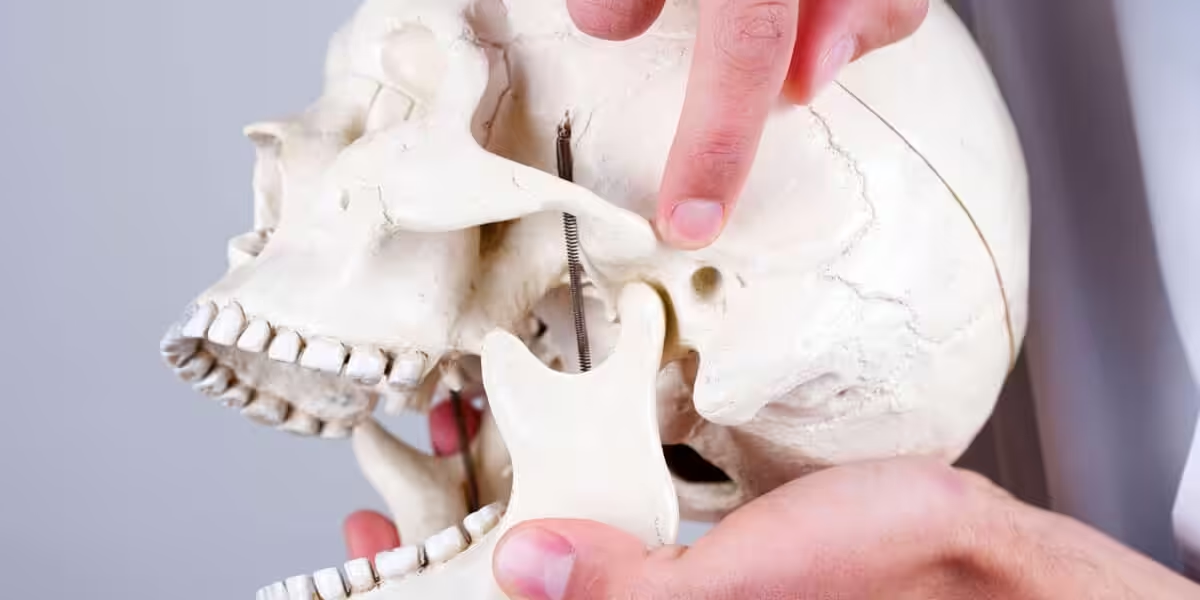
The temporomandibular joint (TMJ) connects the jawbone to the skull.
TMJ disorders often cause discomfort in the cheek, jaw, or ear areas and can affect normal jaw function. Throughout all the stress that we put our joints through, patients may not realize that the soreness or pain they are experiencing in their jaw or ears may be due to stresses on their temporomandibular joint.
In less severe cases TMJ disorders can be treated with self-managed care (eating soft foods, using ice packs, avoiding extreme jaw movement) or nonsurgical treatments (anti-inflammatory medications, Botox injections, or stabilization splints).